
U.S. Department of State Authentication & Embassy Legalization
Some international documents require more than a California apostille.
Countries that are not signatories to the Hague Apostille Convention do not recognize a standard state apostille. Instead, documents must undergo a chain of authentications culminating in consular legalization at the foreign embassy in Washington, D.C. or a regional consulate.
Certified Chain of Custody for Non-Hague Nations
We manage the complete administrative chain — from local county clerk verification and state-level certification to the U.S. Department of State in Washington, D.C. and final foreign consulate legalization.
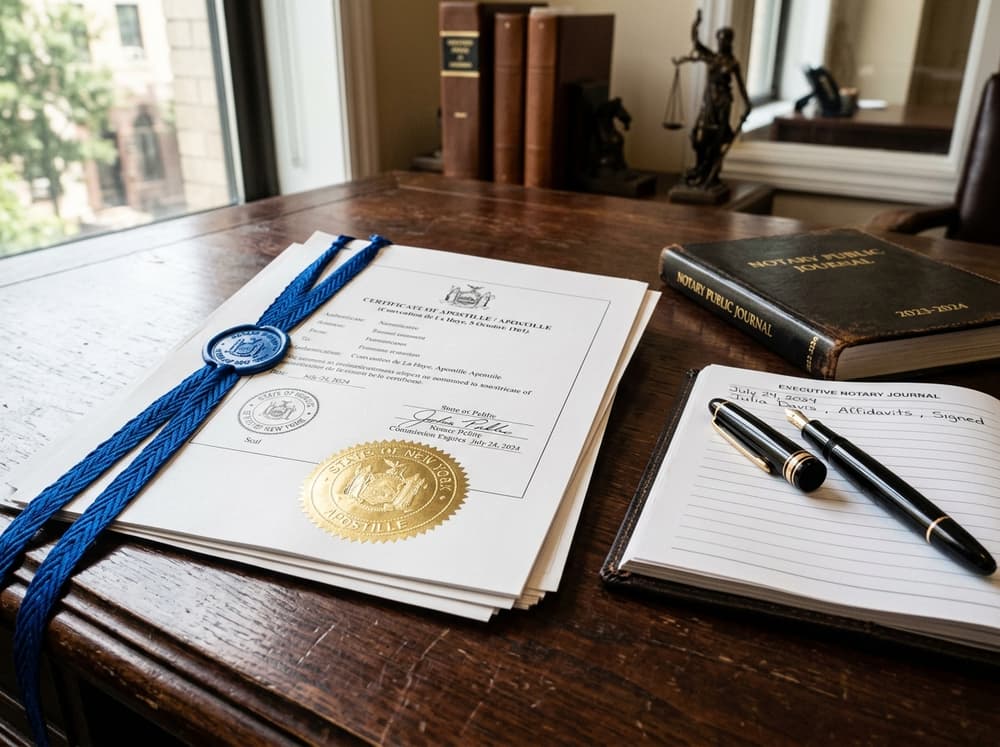
The Multi-Tier Authentication Pathway
Depending on the destination country and document type, the process may involve:
Notarization
Proper notarization by a commissioned California Notary Public.
County Certification
County clerk certification of the notary's commission (when required).
State Authentication
California Secretary of State authentication certificate.
U.S. Dept of State
Federal authentication seal in Washington, D.C.
Embassy / Consulate
Final consular stamp and seal by the destination embassy.
International Document Assistance: Tell Us
Because each foreign government and embassy maintains unique submission rules and translation criteria, tell us:
Commercial contract, university diploma, birth certificate, FBI background check, or power of attorney.
California county recorder, state registrar, university registrar, or federal agency.
Destination nation determines whether Hague Apostille or Embassy Legalization applies.
Dual citizenship, foreign employment, branch office registration, international marriage, or litigation.
Whether the foreign ministry requires a certified translation, specific colored ribbon, or prior chamber of commerce stamp.